
Buying Cacao Powder in Bulk: What to Compare Before You Order
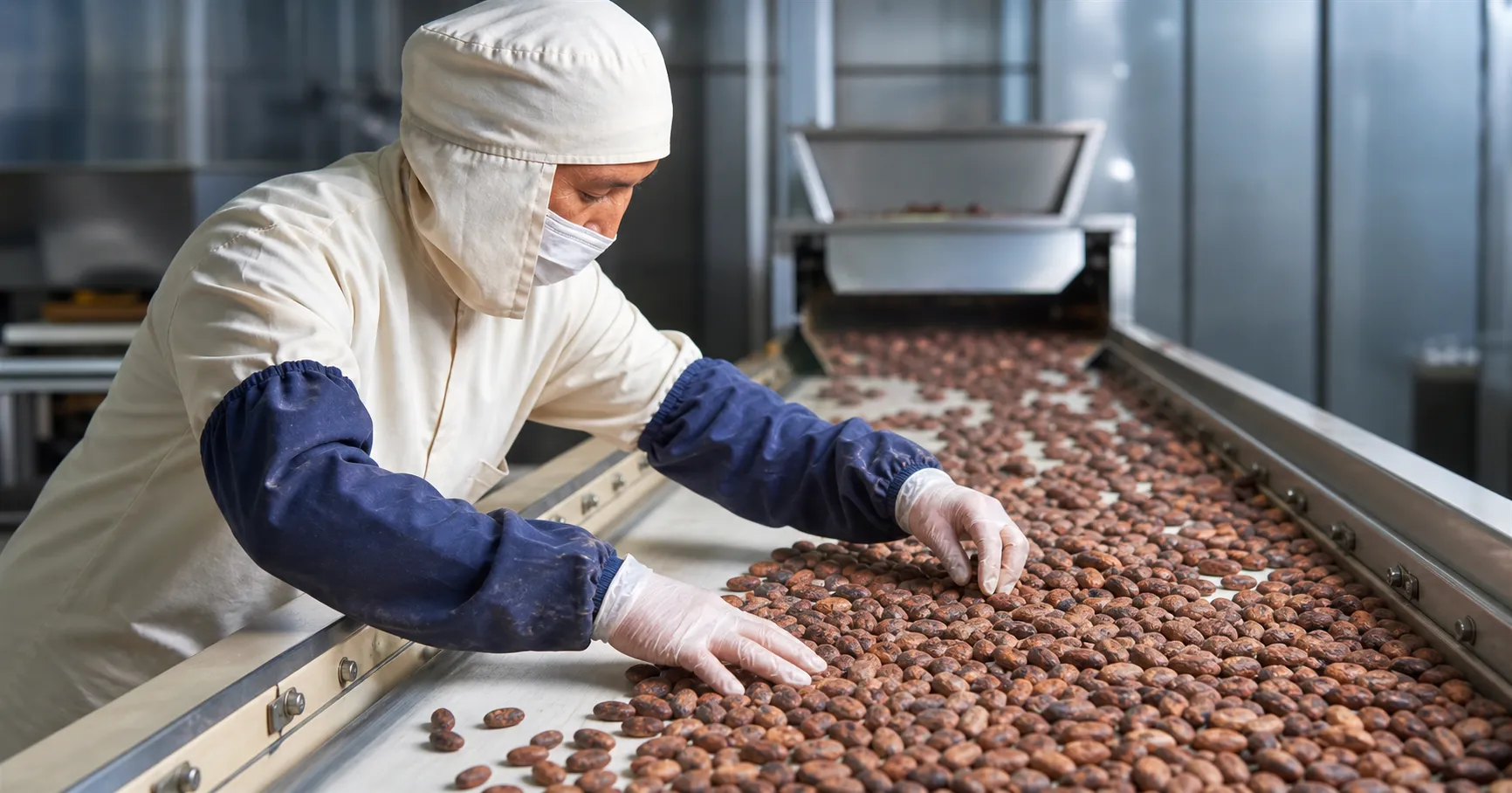
Cacao is the seed of Theobroma cacao and the raw material behind cacao powder. it’s made by fermenting, drying and roasting cacao beans, grinding the nibs into cacao liquor, pressing out much of the cocoa butter and milling the remaining cake into a fine powder. This leaves an unsweetened, reduced-fat ingredient that concentrates cacao solids, aroma, fiber, minerals and naturally occurring flavanols.
Peru is one of the principal origins of fine-flavor cacao. The International Cocoa Organization currently classifies 75% of Peru’s cocoa-bean exports as fine or fine-flavor cacao, a category shaped by genetics, terroir, crop management, post-harvest practices and sensory quality. Those differences can still be expressed in the finished powder, but origin is only one part of the comparison. Roast, alkalization, fat content, particle size, composition and traceability complete the picture.
This guide follows those differences from the bean to the finished specification, then shows how to compare cacao powders according to flavor, nutrition, formulation needs and documented quality.
Reference: International Cocoa Organization — Fine Flavor Cocoa
Cacao Powder vs. Cocoa Powder: What Do the Names Actually Tell You?
“Cacao powder” commonly describes an unalkalized powder made from more gently roasted cacao, while “cocoa powder” is the broader traditional term and may also include products with a stronger roast or Dutch-process alkalization.
The naming is not standardized across suppliers. A product called cacao powder may be technically similar to one sold as cocoa powder, while two products carrying the same name may have very different specifications.
Roast level is one of the first differences to understand. A gentler roast tends to preserve more of the bean’s floral, fruity and nutty character. A stronger roast develops a deeper, darker and more familiar cocoa profile, often with greater roasted intensity and bitterness. Alkalization is a separate treatment that raises pH and further changes color, acidity, flavor and flavanol retention.
Once the names are set aside, the comparison starts with the cacao itself: where it came from, which genetics are present and how the beans were handled before processing.
How Origin, Genetics and Traceability Shape Cacao Powder
The sensory character of cacao powder begins before the beans are roasted or pressed. Genetics, growing region, fermentation and drying establish the flavor potential that later processing can preserve, soften or transform.
Peru’s fine-flavor cacao base can produce powders with floral, fruity, nutty, malty and less bitter profiles, depending on the region, genetics and post-harvest process. Traceability makes those differences easier to understand because it connects the finished powder with a documented origin rather than relying only on a broad “Peruvian cacao” claim.
| Cacao type | Typical sensory direction | How to interpret it |
|---|---|---|
| Criollo | Often lower in bitterness and astringency, with floral, nutty or red-fruit notes | Valued for sensory distinction and rarity; it should not automatically be presented as higher in flavanols |
| Trinitario | Can combine fine-flavor complexity with a stronger conventional cacao body | Often offers a practical balance between aroma, availability and consistency |
| Forastero | Typically stronger, more bitter and more conventionally cocoa-like | Common in mass-market cacao; some material can contain more flavanols than Criollo, so genetics alone do not define nutritional value |
A varietal name is not a complete quality judgment. Fermentation, drying, roast and alkalization can substantially change how the genetic potential is expressed. Origin and cacao type establish the starting point; processing determines what reaches the final powder.

How Cacao Powder Is Made—and Where Its Quality Changes
Each production stage changes something the consumer can taste or something a formulator may need to control. Understanding the process makes the specification easier to interpret.
- Harvest, fermentation and drying. Fermentation develops flavor precursors, while controlled drying stabilizes the beans. Poor fermentation can leave flat, harsh or unbalanced notes that later processing cannot fully correct.
- Sorting and roasting. Defective material is removed before roasting. A lighter roast can retain more origin character and heat-sensitive compounds; a stronger roast creates darker, more intensely roasted flavors.
- Winnowing and grinding. The shell is separated from the nib, and the nibs are ground into cacao liquor or cacao mass. At this stage, the ingredient still contains all of its natural cocoa butter.
- Pressing. Mechanical pressure removes much of the cocoa butter and leaves a solid cake. The pressing target helps determine the powder’s final fat content and influences richness, mouthfeel and handling.
- Optional alkalization. Dutch processing raises pH and can create a darker color, rounder flavor and different ingredient interactions. It also reduces part of the naturally occurring flavanol content.
- Milling and sieving. The pressed cake is milled into powder. Particle-size distribution affects texture, dusting, dispersion and how evenly the powder blends into a formulation.
- Packing and lot identification. Moisture and odor barriers help protect flavor and flow. Lot identification connects the delivered powder with its specification, analytical results and origin records.
By the time the powder is packed, its main differences can be traced to a small group of variables: roast, alkalization, fat, moisture, particle size, sensory profile and lot documentation.
Natural vs. Alkalized Cacao Powder
Natural and alkalized powders can begin with similar cacao but produce noticeably different color, flavor, acidity and nutritional positioning.
Natural cacao powder is made without an alkalizing treatment. It is usually lighter brown, more acidic and brighter in flavor. Alkalized, or Dutch-process, powder is treated to raise its pH, creating a darker color and a smoother, rounder cocoa profile.
| Comparison | Natural powder | Alkalized / Dutch-process powder |
|---|---|---|
| Color | Lighter brown | Dark brown to almost black, depending on treatment |
| pH and acidity | More acidic | Partially or substantially neutralized |
| Flavor | Brighter, fruitier or sharper | Smoother, rounder and more conventionally cocoa-like |
| Flavanols | Generally better retained | Generally reduced by alkalization |
| Formulation effect | Acidity and sharper flavor must be considered in the complete system | Higher pH changes color, flavor and interactions with other ingredients |
| Positioning | Often selected for natural, unalkalized or minimally processed positioning | Often selected when darker color and a rounder cocoa profile are priorities |
Neither option is automatically superior. Natural powder may be the stronger choice when origin character, acidity or flavanol retention matters. Alkalized powder may be more suitable when a darker color and a milder, rounder cocoa profile are required.
The Specifications That Separate One Cacao Powder From Another
The specification translates the bean and the process into characteristics that can be compared. These numbers and descriptions help predict how the powder may taste, feel and perform.
| Variable | What it changes | What to look for |
|---|---|---|
| Roast level | Aroma, color, bitterness and retention of heat-sensitive compounds | A process description plus a representative sensory sample |
| Natural vs. alkalized | pH, color, flavor, ingredient interactions and flavanol retention | Declared treatment and pH range where relevant |
| Fat content | Richness, mouthfeel, texture and handling | Target percentage and tolerance for the offered grade |
| Particle size | Mouthfeel, dispersion, dusting and uniformity in dry systems | Test method, target distribution and an application test |
| Moisture | Flow, clumping, stability and microbiological risk | Maximum limit and storage requirements |
| Sensory profile | Bitterness, acidity, roast intensity and origin character | A representative sample evaluated in the intended use |
| Origin and genetics | Traceability and potential sensory differentiation | Country, region, genetic background and available lot records |
| Lot documentation | Links the delivered material with declared and tested characteristics | Specification, COA and relevant certificates or technical files |
Terms such as raw, organic and unsweetened answer different questions. “Raw” has no single universal legal definition for cacao powder and should be interpreted through the actual thermal process. “Organic” refers to a certified production system. “Unsweetened” means no sweetener has been added. None of these terms defines roast, fat content, pH or particle size by itself.

Cacao Powder Benefits: What Comes From the Bean and What Processing Can Change
Cacao powder concentrates the solid fraction of the bean, which is why it contains dietary fiber, minerals, flavanols and naturally occurring methylxanthines such as theobromine and caffeine. These components help explain both its nutritional value and its behavior in a product.
| Component | Why it matters to consumers | Why it matters in a specification or product |
|---|---|---|
| Flavanols and polyphenols | Naturally occurring antioxidant compounds associated with cacao solids | Levels vary with genetics, fermentation, roast and especially alkalization; quantitative positioning requires product-specific testing |
| Dietary fiber | Contributes to the nutritional value of unsweetened cacao powder | Nutrition labeling should use analytical values for the actual grade and serving |
| Magnesium | One of cacao’s characteristic minerals | Claims depend on concentration, serving size and destination-market rules |
| Iron, copper and manganese | Naturally occurring mineral contribution | Declared values should come from verified composition data |
| Theobromine and caffeine | Contribute to cacao’s characteristic bitterness and stimulant profile | Analytical limits may matter for serving size, formulation and consumer positioning |
| Fat | Provides part of the richness and mouthfeel that remains after pressing | The remaining percentage separates lower-fat from higher-fat grades and affects texture and handling |
Processing is central to any comparison of benefits. A natural, gently roasted powder may retain more flavanols than a strongly alkalized powder, but the word “cacao” does not prove a higher amount. Laboratory results are needed when a specific nutrient or flavanol claim is important.
How to Match Cacao Powder Quality to the Result You Want
There is no single best cacao powder for every use. The strongest option is the one that delivers the flavor, composition, color, texture and documentation required for the intended result.
| Priority | Characteristics to compare | Likely direction |
|---|---|---|
| Fine-flavor or origin character | Documented origin, genetics, fermentation, gentler roast and sensory sample | Natural powder with traceable fine-flavor cacao may preserve more floral, fruity or nutty expression |
| Darker color and rounder cocoa flavor | Alkalization level, pH and roast intensity | An alkalized or more strongly roasted powder may better fit the target profile |
| Higher flavanol retention | Natural processing, roast history and analytical data | Unalkalized and gently processed powder is the stronger starting point, but testing should confirm the amount |
| Richer mouthfeel | Fat percentage and representative sample | A higher-fat grade generally contributes more richness |
| Lighter or drier cacao effect | Lower fat, roast and particle size | A lower-fat grade can deliver concentrated cacao solids with less richness |
| Smoother texture or more even dispersion | Particle-size distribution, wetting behavior and application test | A finer powder may help, but performance must be evaluated in the actual formula |
| Traceable or premium sourcing story | Region, genetics, lot records, certifications and supplier documentation | Choose a powder whose origin and claims can be supported beyond the label |
A sample is most useful when it is tested in the product or preparation where the powder will actually be used. Color in the bag, fineness by sight or a broad “premium cacao” description cannot predict the complete result.

How to Verify Cacao Powder Quality Before Buying
Quality should be visible in the product and supported by information. Traceability explains where the cacao came from, while the specification, COA and sample explain what was produced and delivered.
| What to check | Useful for any buyer | Additional B2B verification |
|---|---|---|
| Ingredient identity | Pure, unsweetened cacao powder; no undeclared blends or sweeteners | Product specification and ingredient declaration |
| Natural or alkalized | Check the product description and ingredient information | Declared treatment and pH range where relevant |
| Origin and traceability | Country or region of origin, certifications and lot identification | Traceability records linking the commercial lot to the documented source |
| Composition | Nutrition panel and clear serving information | Fat, moisture, microbiology, mineral or flavanol testing when required |
| Safety | Reputable packaging, lot code and storage guidance | Microbiological criteria and relevant pesticide, contaminant and heavy-metal controls |
| Sensory quality | Flavor, bitterness, aroma, color and freshness | Representative sample evaluated in the intended formula or process |
| Certification claims | Current and applicable certification marks | Certificates that apply to the specific product and supply chain |
Amazon Andes describes its raw-materials program as supported by lot traceability, specifications, COAs and additional technical files on request. Its sustainability framework provides further context on grower relationships, post-harvest support and sourcing practices.
Those materials provide a starting point. Available grades, lot-specific results, certifications, packaging and sample options should still be confirmed for the product under evaluation.
Storage, Packaging and Shelf Life
Cacao powder absorbs moisture and odors, so it should be kept in a cool, dry place and protected by a suitable food-grade package with an effective moisture and aroma barrier. Poor storage can lead to clumping, loss of aroma and deterioration in sensory quality.
Shelf life depends on moisture, fat content, packaging and validated storage conditions. Use the shelf life and storage range stated for the specific product rather than assuming that every cacao powder will remain stable for the same period.
Frequently Asked Questions
Are cacao powder and cocoa powder the same?
They are the same basic product: ground, defatted cacao solids. “Cacao powder” often suggests a natural, unalkalized or more gently roasted product, while “cocoa powder” is the broader traditional term. The actual difference must be confirmed through processing details and the specification.
Is natural cacao powder better than Dutch-process powder?
It depends on the result. Natural powder is more acidic, often brighter in flavor and generally retains more flavanols. Dutch-process powder is darker, rounder and less acidic. The better choice is the one that fits the intended flavor, color, composition and use.
Which cacao type makes the best powder?
Criollo, Trinitario and Forastero can all produce useful powders. Criollo is often valued for lower bitterness and fine-flavor complexity, Trinitario for its balance of aroma and availability, and Forastero for a stronger conventional cocoa profile. Fermentation and processing remain just as important as genetics.
Does cacao powder contain flavanols?
Yes. Cacao powder naturally contains flavanols and other polyphenols, but the amount varies with genetics, fermentation, roast and alkalization. A quantitative claim requires product-specific analysis.
What should be compared before buying cacao powder in bulk?
Compare origin, genetics, natural or alkalized processing, roast level, fat content, moisture, particle size, sensory profile, microbiological criteria, relevant contaminant controls, certifications, specification, COA and a representative sample.
Compare a Cacao Powder Specification With Our Export Team
Share the flavor, color, fat level, application, target market, estimated volume and certifications you need. The Amazon Andes export team can confirm the cacao powder specifications, documentation and sample options currently available.
Contact the Export Team